5 min read ResuFit Team
Design Your Success: Creating Standout Designer Resumes That Balance Creativity and Functionality
Job Application Materials Resume & CV Tools
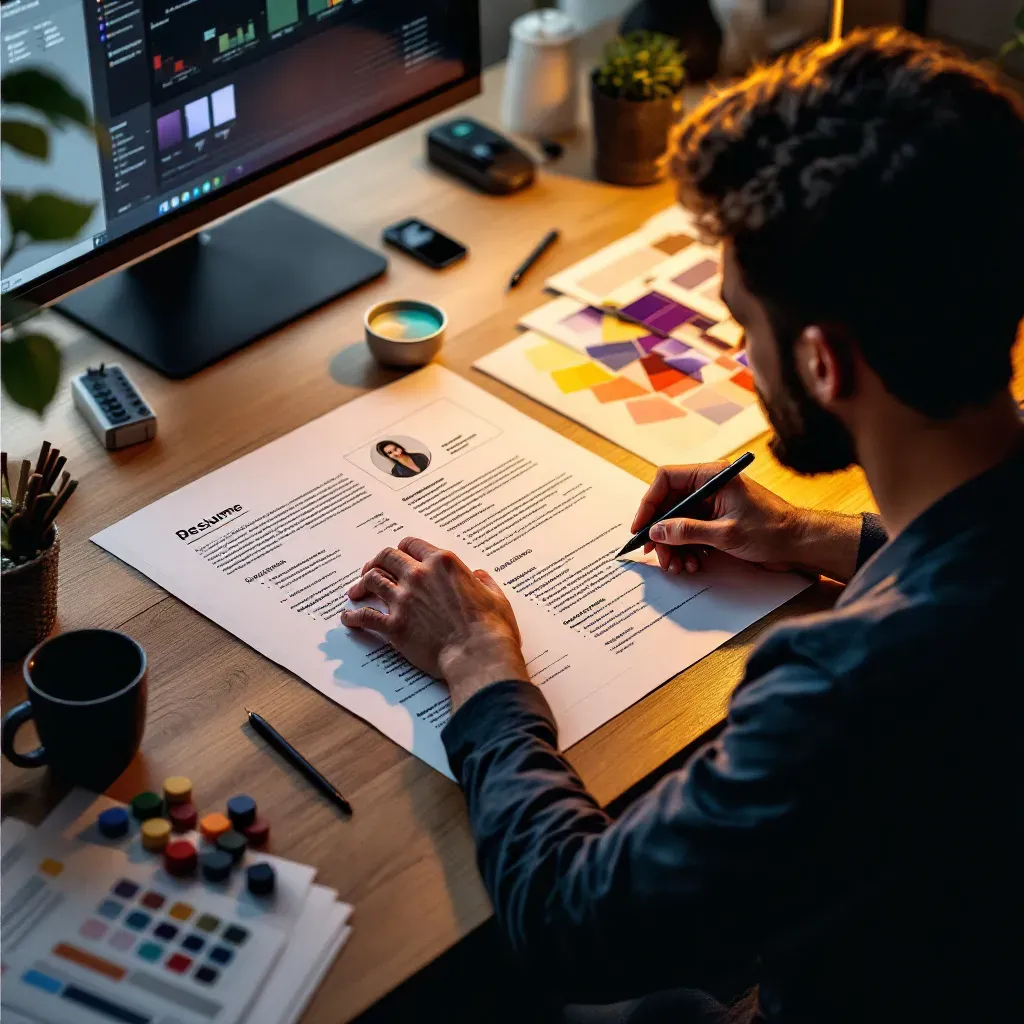
As a designer, your resume serves a dual purpose: showcasing your professional qualifications while demonstrating your design sensibilities. In today’s competitive job market, striking the perfect balance between creative expression and functional requirements is essential for landing those coveted design roles.
Designers face a unique challenge when crafting resumes. While most professionals focus solely on content, designers must consider how their resume’s visual presentation reflects their skills. However, with 92% of recruiters using Applicant Tracking Systems (ATS) like Greenhouse or Lever, even the most creative resume examples must maintain functionality.
The key lies in strategic minimalism—using clean layouts with intentional whitespace and restrained color palettes. Fonts like Arial or Calibri remain ATS-friendly while still allowing for typographic hierarchy. Rather than embedding graphics that confuse ATS parsers, consider linking to your Behance or Dribbble profiles in your header.
When describing your experience, replace generic responsibilities with achievement-focused content featuring metrics. For example: “Boosted client conversion by 40% through UX redesign (2023)” tells a compelling story while remaining scannable.
Your resume formatting should reflect your design specialty while maintaining readability. Let’s explore how different design disciplines can optimize their resumes:
Graphic designers should demonstrate typography mastery through careful font pairing and hierarchy. Consider including subtle notes about CMYK/RGB color choices in your resume footer to showcase technical knowledge. Your personal branding elements should create a cohesive visual identity without overwhelming the content.
When seeking inspiration, look beyond generic graphic design resume templates to create something that uniquely represents your aesthetic while maintaining clean, scannable layouts.
UX/UI designers should apply user-centered thinking to their resume organization. Consider how recruiters will scan your document and structure information accordingly. Include concise case study snippets with user testing statistics that demonstrate your impact.
Information architecture principles should guide your content hierarchy, making it easy for hiring managers to find what they need. Balance your portfolio links with resume content by including QR codes or shortened URLs to specific projects that showcase your process.
Understanding the technical requirements for different submission methods ensures your design translates properly across contexts:
Print Considerations:
Digital Specifications:
While exploring cool looking resumes, remember that technical execution matters as much as creative concept. The most impressive designs fail if they don’t function properly across different platforms.
ATS systems scan resumes for keywords and structure before human eyes ever see them. To create designer resume format that passes these systems:
ResuFit offers specialized tools for designers to create ATS-optimized resumes that maintain visual impact. Their AI-powered analysis helps identify missing keywords and suggests improvements while preserving your creative vision.
Design preferences vary significantly across English-speaking markets:
US Market:
UK Market:
When adapting your resume for different regions, research each market’s American resume format sample expectations and adjust accordingly. What works brilliantly in one market might hinder your application in another.
Follow this step-by-step process to create a resume that balances creativity with functionality:
Consider working with affordable resume writing services that specialize in creative fields if you’re struggling to balance these elements effectively.
Your resume is often your first design project in the eyes of potential employers. By thoughtfully balancing creativity with functionality, you demonstrate not just your design skills but your problem-solving abilities and professional awareness.
Remember that the most effective design resume examples showcase both aesthetic sensibility and practical understanding of job search requirements. In a field where form and function are equally important, your resume should embody this fundamental design principle.
With ResuFit‘s AI-powered resume optimization tools, designers can create documents that showcase their creativity while ensuring they make it through ATS systems to land on recruiters’ desks. Take advantage of their specialized features to craft a resume that truly represents your design capabilities while meeting all technical requirements for successful job applications.
Get the latest tips on resume writing and career advice.